
Every rotating machine — from a drone propeller to a turbine — produces vibration if its mass isn’t distributed perfectly around its axis. Even a tiny imbalance can generate powerful forces at high speed, leading to noise, wasted energy, and premature wear on bearings and other components. Over time, this vibration shortens the life of your equipment and reduces performance.
Dynamic balancing is the precise method of detecting and correcting those imbalances while the part is spinning. Using advanced electronic sensors, the system measures vibration amplitude and phase, pinpoints the heavy spot, and determines exactly how much weight to add or remove. The result is a rotor that spins smoothly and efficiently, with dramatically reduced vibration.
While every machine has some residual vibration, proper dynamic balancing brings it down to a level that no longer affects performance or component life. The goal is simple: make your system run as smoothly, quietly, and efficiently as possible.
In contrast to basic static balancing — where a part is allowed to settle on low-friction bearings and material is removed from the heavy side — dynamic balancing captures what really happens when the rotor is in motion. It measures vibration in real time, under true operating conditions, for far greater accuracy.
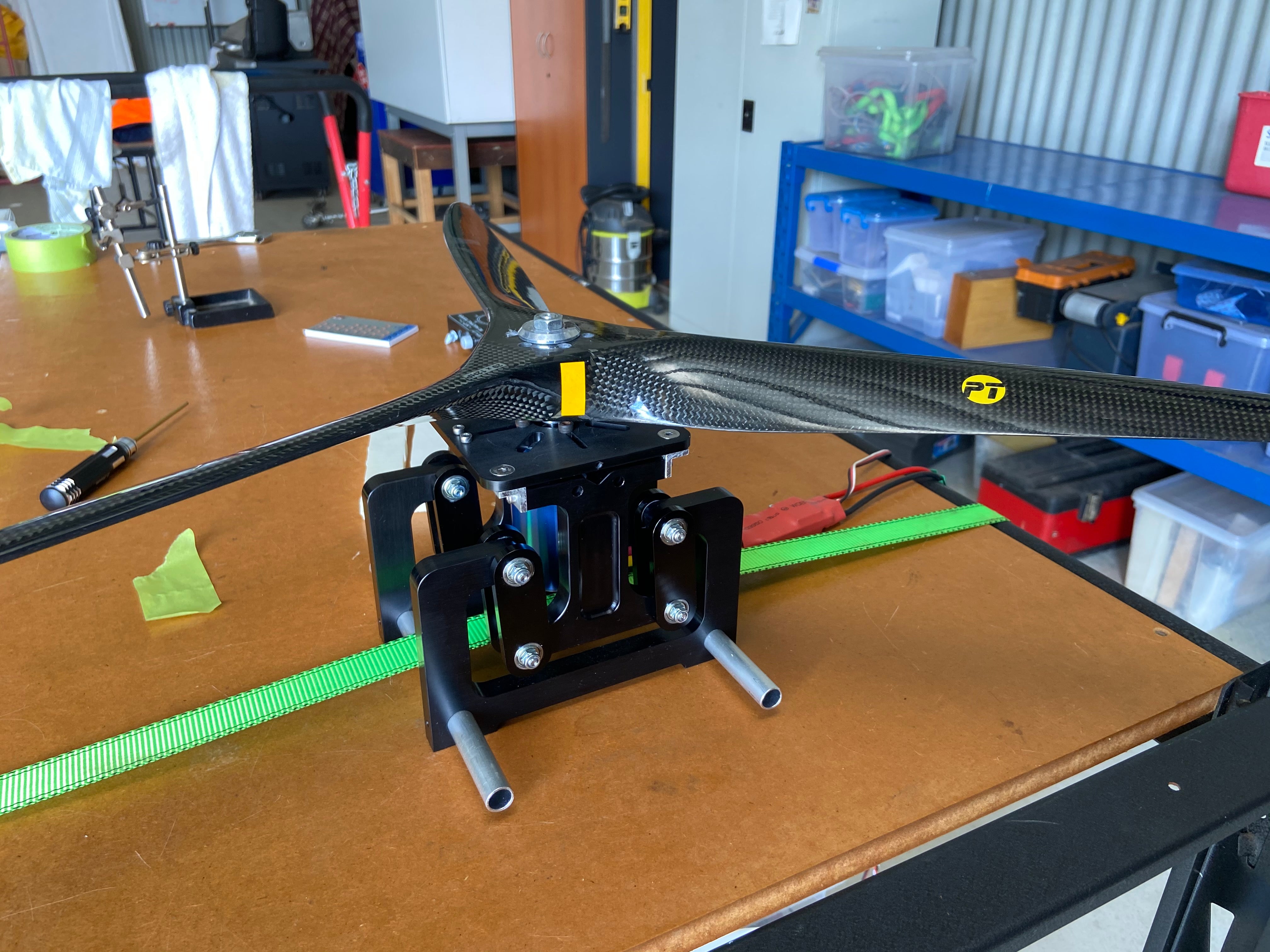
Single-plane balancing is ideal for most drone and RC applications, such as propellers, ducted fans, and wheels. For more complex equipment like gas turbines or multi-stage rotors, a two-plane balance provides the precision required to eliminate vibration across the entire assembly.
Dynamic balancing transforms raw mechanical motion into refined performance. It extends bearing life, reduces noise, and ensures every rotation counts — because in precision engineering, balance isn’t optional; it’s everything!
Bestseller
Benefits of Balancing
- Reduce and eliminate vibration levels.
- Increase motor life.
- Increase performance.
- Reduced noise.
There are many reasons why a component may need to be balanced:
- Dirt build-up (typically on fans)
- Erosion (impellers)
- Corrosion of internal parts
- Casting imperfections, voids and inclusions
- Mismatched lengths of keys and keyways
- Mechanical and thermal distortion
- Shifting mass due to loose parts and poor tapered hub fits
- Previous unsuccessful balancing attempts
- Improper assembly of parts